
23. May



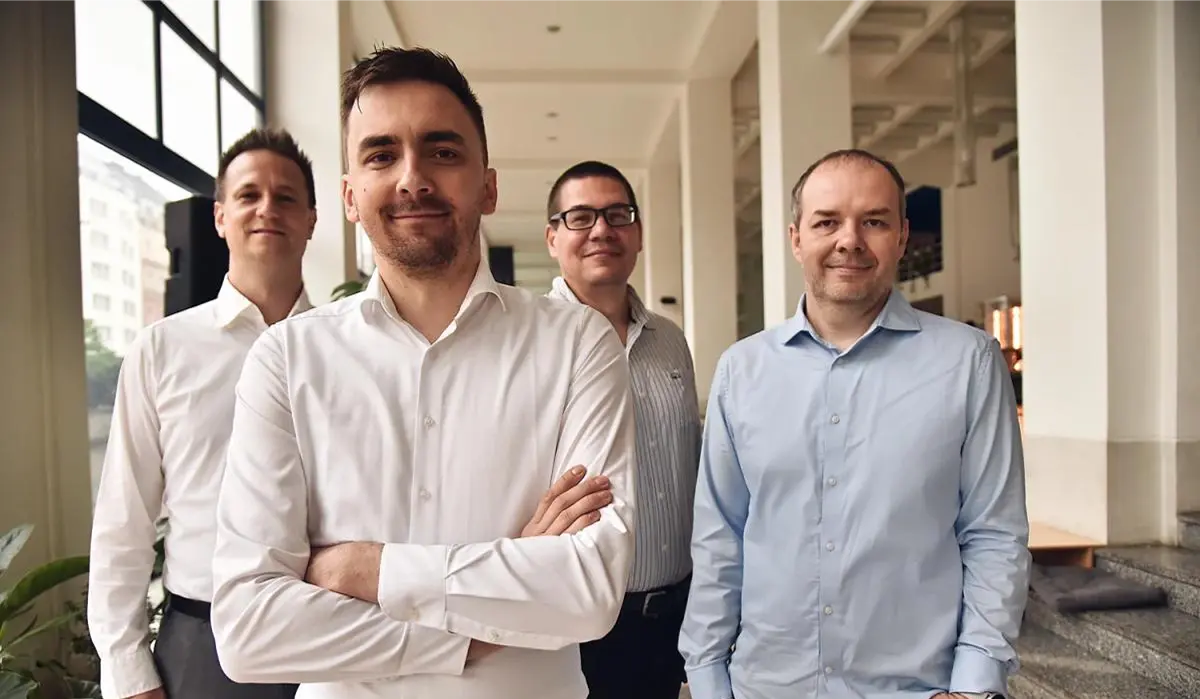
Terraverse is developing a platform that helps manage energy systems and optimize their operation, including the charging and discharging of batteries.
Energy has long been considered a conservative and not very dynamic field. However, as it becomes increasingly decentralized and renewable sources play an ever-larger role, the importance of modern digital technologies that can manage and optimize the entire process is rising. An example is the young Czech company Terraverse, which received funding for its development from the second richest Czech woman.
Flexibility, aggregation, ancillary services, community energy… These have all become very popular terms in recent months, both among laypeople and investors. However, someone must manage all those solar panels, wind turbines, or batteries; specifically, their synergy is necessary if they are to complement each other and perhaps even stabilize the entire grid.
And it is precisely the tool that enables this which is being created by the programmers and energy experts at Terraverse, a startup not even two years old. Its founders, like several other energy revolutionaries, passed through the Nano Energies group, which was founded in 2008 by entrepreneur Petr Rokůsek with a vision to green the Czech energy sector and move it into the 21st century. And that is exactly what is starting to happen now.
“We want to be the ones who enable this transformation,” points out Terraverse CEO Daniel Szántai. The point is that his startup has developed a specialized platform capable of managing larger energy systems, whether it is a set of smaller power plants with photovoltaics or a corporate site with a large-capacity battery – and it offers this platform as a subscription service to other companies.
A typical customer might be an energy company with hundreds or thousands of clients. It uses Terraverse software, for example, to aggregate this “mass” of its own and then offer it as one large block to the Czech transmission system operator, ČEPS, to help cover fluctuations in the grid (these are the much-discussed ancillary services).
“These companies are not software developers; we are. They can take our platform, wrap it in their own visual identity, and, figuratively speaking, have no more worries,” says Szántai, naming one of his company's customers: Enetiqa Trading, the trading division of a multinational energy group operating in fifteen Czech cities.
However, making life easier for energy portfolio operators is not the only potential use for Terraverse. “Our client could also be a larger company with a production site that has multiple sources and multiple offtake points. Typically a factory. And our system allows them to manage it so that it makes the most sense,” explains Szántai.
This was also the reason why Jitka Cechlová Komárková, the second richest Czech woman, who according to Forbes magazine has a fortune exceeding 13 billion CZK, invested tens of millions of crowns in Terraverse. She owns the leading railway wheel manufacturer Bonatrans Group, which employs several thousand people in a giant industrial complex in northern Moravia.
“We wanted a partner who is not directly from the energy industry but who understands the potential and purpose of our platform because we are solving a problem they are familiar with,” says Szántai. At the same time, he clarifies why they chose an investor from the engineering industry, which might initially sound unusual for a digital energy startup: “However, if we had partnered with a specific energy group, it would essentially disqualify us from offering our platform to their competitors.”
Szántai and his team have reportedly already received offers for Terraverse to become part of one of the large energy companies, but they turned them down. For now, they are not considering a sale of the young startup because they have the funds for their expansion: next year, they would like to acquire their first clients in Poland and Slovakia and double the total capacity of the sources managed by their platform. “Currently, it is over 100 megawatts,” the entrepreneur adds. The startup's turnover last year was just under 20 million CZK.
Szántai co-founded Terraverse the year before last with Martin Skácel and Miroslav Oško, who, as experienced programmers, began their careers at the leading Czech antivirus company Avast (now Gen), but all three met at Nano Energies. Several projects have gradually spun off from this group, which Petr Rokůsek has already sold. “We are approaching it a bit differently than the other guys,” Szántai laughs.
He is referring to the companies Delta Green and Nano Energies, which retained the original name. They also offer flexibility, aggregation, and energy management services to household and corporate clients, respectively; however, they do so under their own names as progressive energy traders built on modern technologies. “They have their own software that they developed. We are here for those who do not want to develop it themselves and want to outsource it to someone else so they don't have to worry about it,” adds Szántai.
And does he not compete with them in the sense that some larger enterprises could subscribe to his platform themselves and then no longer need additional services from companies like Nano Energies, or perhaps C-energy or Solar Global? All of these not only supply energy to clients or buy it from them but also offer management and optimization. “Even these entities are our potential clients. At the same time, it is true that our existing clients are their competitors, but that is good for the market, isn't it?” concludes Daniel Szántai.
Author:
Luboš Kreč
If you like this article, please share it



Comment
SmartCube and Security: How We Protect Digital Management of Energy Portfolios
5. May